Indoor Hydroponic Garden With Fish: Aquaponics Guide
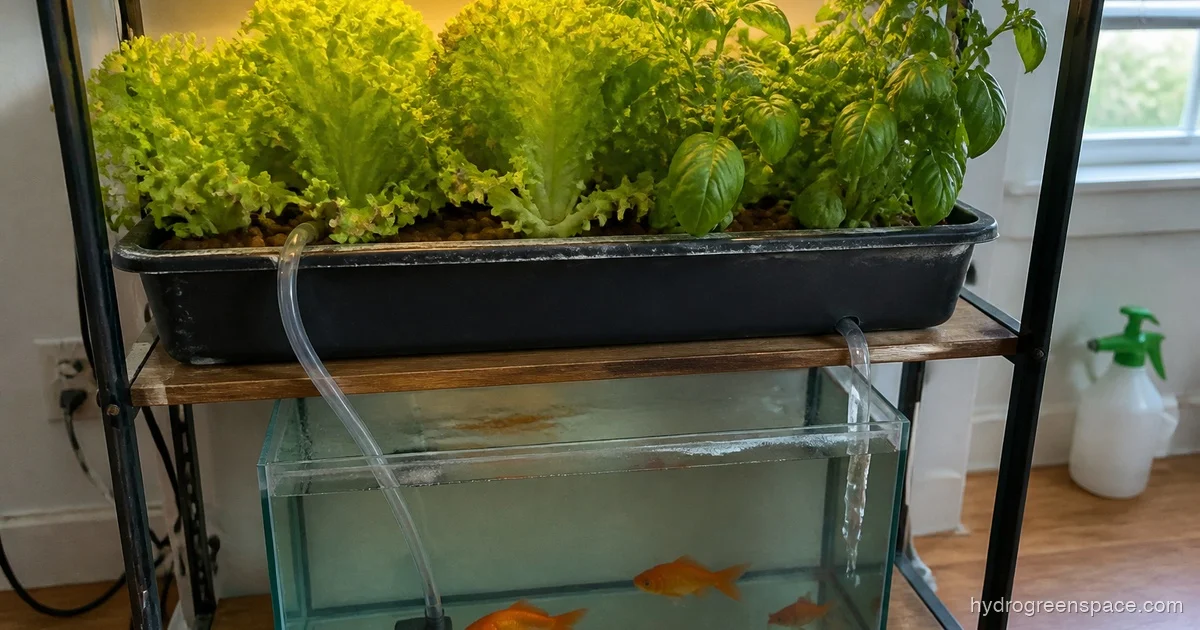
If you’ve ever looked at your hydroponic reservoir and thought “what if I just dropped a goldfish in there,” you’re not alone. The idea of combining fish with a hydroponic garden is genuinely smart: fish produce waste, plants need nutrients, and water circulates between them. That’s the core of aquaponics. But there’s a critical difference between tossing a fish into a Kratky jar and running a real system that keeps both the fish and your plants alive long-term. This guide covers exactly that.
Aquaponics is not complicated once you understand what’s actually happening in the water. If you’ve already built a basic hydroponic setup (or you’re planning to, starting with the basics helps a lot), adding fish is a logical next step that makes your system more self-sustaining, not more work-intensive.
How a Fish-Based Hydroponic Garden Actually Works
A standard hydroponic system feeds your plants with a nutrient solution you mix and add manually. An aquaponic system replaces that nutrient solution with fish-tank water, but only after that water has gone through a biological process that converts fish waste into plant food.
Here’s the loop in plain terms:
- Fish eat and produce ammonia through their waste and gill output
- Beneficial bacteria (specifically Nitrosomonas and Nitrobacter species) colonize your grow media and convert ammonia first into nitrite, then into nitrate
- Plant roots absorb nitrate as a primary nitrogen source
- The now-filtered water drains back into the fish tank, cleaner than it left
This is the nitrogen cycle, and it’s the entire foundation of aquaponics. Skip or rush this step and you’ll kill the fish before your plants even sprout. The good news: once it’s established, the system largely runs itself.
The key distinction from pure hydroponics is that plants in a well-cycled aquaponic system don’t need separate nutrient solution; the fish provide nitrogen, and trace elements come from fish food and water. If you want to understand how the two systems compare at a deeper level, this aquaponics vs hydroponics breakdown covers the trade-offs side by side.
Cycling the Tank First (This Is Not Optional)
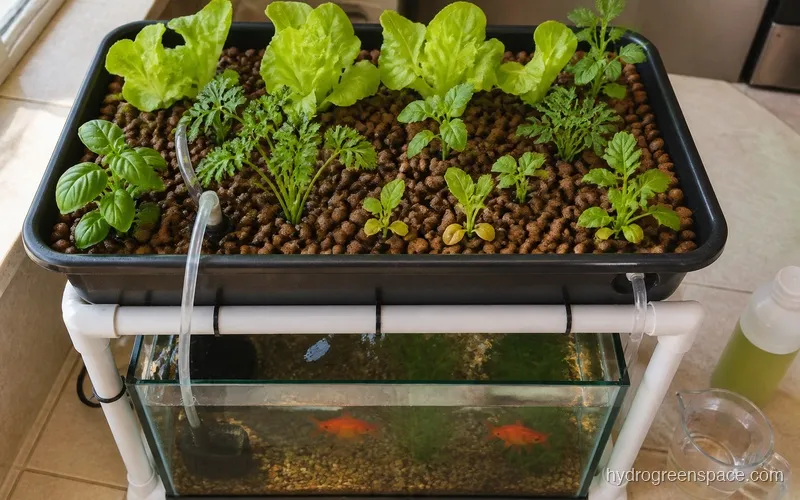
Cycling is the process of building up a colony of beneficial bacteria in your system before fish are introduced or plants are planted. It takes 3 to 6 weeks, and skipping it is the most common reason beginners kill their fish.
During cycling, ammonia rises, then nitrite spikes (both toxic to fish at high levels), and eventually nitrate appears as bacteria populations stabilize. You test the water weekly with an aquarium test kit and wait until ammonia and nitrite read near zero while nitrate is present. That’s when the system is ready.
Two ways to cycle:
Fishless cycling: Add a small dose of pure ammonia (no surfactants) to the empty tank every few days. This feeds the bacteria without risking any fish. Then introduce fish once levels stabilize. This is the method I’d recommend for anyone new to aquaponics.
Fish-in cycling: Add hardy fish immediately and do frequent partial water changes to keep ammonia from spiking to lethal levels. Works, but it’s stressful on both the fish and you.
What I’d do: Cycle without fish for 4 weeks, test twice a week, and don’t rush it. A few extra weeks up front saves months of frustration and dead fish later.
The beneficial bacteria in your system are doing the same job they do in any biofilter, but the difference in aquaponics is that you need them thriving before anything else goes in.
Best Fish for a Small Indoor Aquaponics Setup
Not every fish belongs in a home aquaponic system. You want species that are hardy, tolerant of fluctuating water conditions during the learning curve, and appropriate for the tank size you’re working with.
| Fish | Min Tank Size | Temp Range | Notes |
|---|---|---|---|
| Goldfish | 20 gallons | 65–72°F | Hardy, high waste output (great for plants), very forgiving |
| Tilapia | 50+ gallons | 75–85°F | Fast growth, edible, needs warm water consistently |
| Guppies | 10 gallons | 72–82°F | Good for micro systems, low waste, colorful |
| Koi | 100+ gallons | 60–75°F | Not for most indoor setups; grow large fast |
| Catfish | 30+ gallons | 70–80°F | Bottom feeders, good tank cleaners, edible |
| Bluegill | 50+ gallons | 65–75°F | Native species, edible, harder to source |
For a first indoor system, goldfish are the honest answer. They produce enough waste to feed a meaningful amount of plants, they tolerate beginner mistakes, and they’re cheap to replace if something goes wrong while you’re learning. For more detailed species breakdowns, the dedicated best fish for aquaponics guide goes deeper on stocking ratios and feeding rates.
If you’re specifically considering goldfish (a very reasonable choice for small setups), goldfish aquaponics covers the specifics of managing a goldfish-based system.
What Plants Thrive in an Aquaponic System
Not all plants are equally suited to fish-tank water. The nutrient profile from aquaponics is heavier in nitrogen and lighter in phosphorus and potassium compared to synthetic nutrient solutions. That means leafy greens are natural winners.
Best performers:
- Lettuce (nearly foolproof, with low nutrient demand and fast growth)
- Basil and most culinary herbs
- Chard, kale, spinach
- Watercress (practically made for aquaponic water)
- Mint (invasive in soil, contained beautifully in a grow bed)
More challenging:
- Tomatoes, peppers, cucumbers: fruiting crops need more phosphorus and potassium than fish waste typically provides at small scales. Doable at larger system sizes, but not for beginners.
- Strawberries: possible, but pH and nutrient balance become finicky.
If you’ve been growing herbs in a standard hydroponic setup, you already know what they like. Adding fish shifts the nutrient source but not the plants’ fundamental needs, and an indoor herb garden hydroponic system is genuinely one of the best entry points before stepping up to a full aquaponic build.
Ready-Made Options vs. DIY
Off-the-Shelf Aquaponic Kits
If you want to try an indoor hydroponic garden with fish without building anything, two products are worth knowing:
Back to the Roots Water Garden is a countertop system with a 3-gallon fish tank and a small grow tray on top. It comes with everything including fish food and grow media. It’s a functional demonstration of the concept, not a production system. Expect to grow a handful of herb starts, not a full kitchen garden. Good for kids, good for learning the biology, limited as a food-production tool.
AquaSprouts Garden fits on top of a standard 10-gallon aquarium you provide. More grow space than the Back to the Roots, still modest. The benefit here is that you can use a tank you already own and choose your own fish.
Both are real aquaponic systems in miniature. The nitrogen cycle still applies. You still need to cycle the tank. They just remove the building-from-scratch variable.
DIY: The Basic Media Bed Design
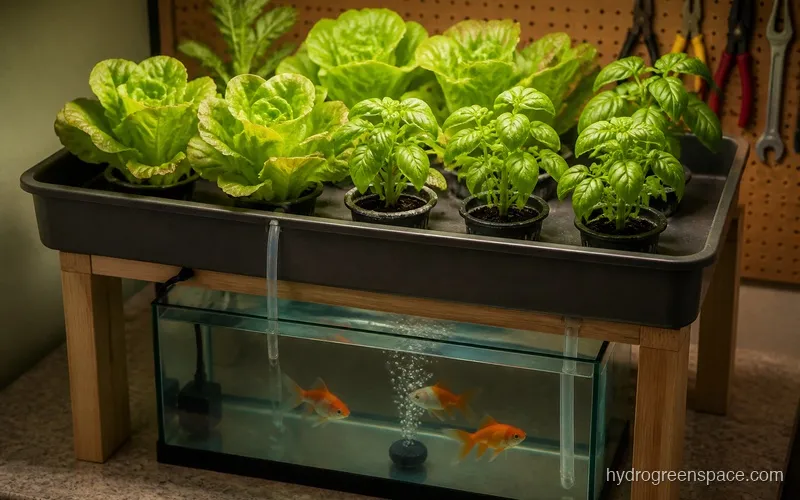
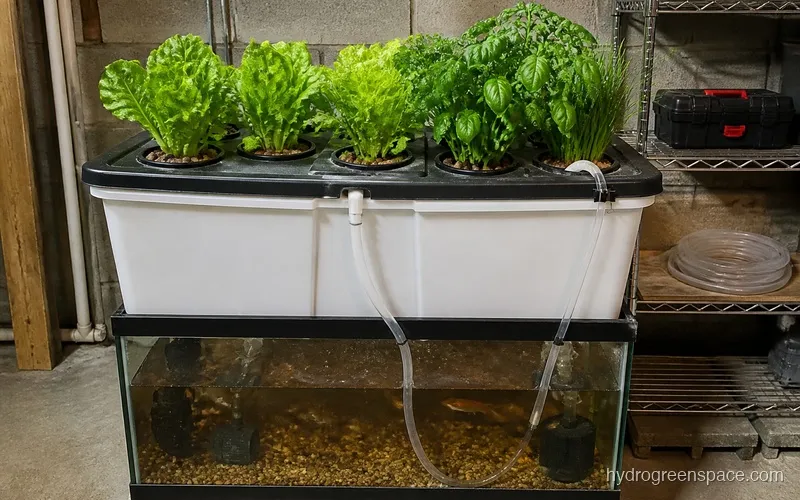
For anyone wanting meaningful plant production, a DIY media bed system is the most common beginner build. Here’s the core setup:
What you need:
- Fish tank (20 to 55 gallons for a starter system)
- Grow bed (a food-safe container, roughly half the volume of the fish tank)
- Submersible water pump
- Hydroton or lava rock as grow media
- Air pump and air stone
- Aquarium test kit
- Bell siphon or timer-controlled flood-and-drain
The grow bed sits above or beside the tank. The pump pushes water from the fish tank up into the grow bed, it floods the media (where bacteria live and plant roots grow), then drains back to the fish tank. If you’ve already built a basic indoor hydroponic garden, you already understand reservoir management and water circulation, and this builds directly on that.
The ratio that works in most beginner builds: 1 cubic foot of grow media per 10 gallons of fish tank water. Don’t overstock fish. A general rule is 1 inch of fish per 5 gallons of water (not per 1 gallon as some aquarium guides suggest, since aquaponics adds nutrient load).
Warning: Aeration is not optional when fish are involved. Your air pump needs to run continuously. Plants pull oxygen from roots, fish need dissolved oxygen in the water, and beneficial bacteria need oxygen to thrive. A power outage that cuts aeration for more than a few hours can crash a system quickly. Have a battery backup or a passive siphon design as contingency.
For a cost-conscious build, building a cheap hydroponic system covers the same basic principles of working with food-safe containers and budget pumps, and most of it applies directly to aquaponic builds.
If you’re adding grow lights to your indoor setup (and you almost certainly will need to), choosing the right indoor hydroponic lighting covers the options and how to match them to your plant load.
Maintaining Water Quality Over Time
Once your system is cycled and running, your weekly maintenance list is short but non-negotiable:
Test water twice a week for the first month, then weekly:
- Ammonia: should be 0 to 0.5 ppm in a healthy system
- Nitrite: should read near zero (0 to 0.25 ppm)
- Nitrate: 20 to 80 ppm is the productive range for plant growth
- pH: 6.8 to 7.2 is the aquaponic sweet spot (fish prefer 7+, plants prefer 6.5, bacteria are comfortable across the range)
Feed fish consistently but carefully. A common mistake is overfeeding; uneaten food decomposes and spikes ammonia before bacteria can process it. Feed only what fish consume in 5 minutes, once or twice daily.
Top off evaporated water with dechlorinated water. Tap water chlorine kills the bacteria that run your entire system. Let tap water sit 24 hours to off-gas, or use a dechlorinator.
Watch for algae. Light reaching the fish tank water encourages algae growth, which competes with your plants for nutrients and can clog lines. Cover the tank surface or use an opaque tank. If you’re dealing with algae in the grow bed itself, managing algae in hydroponic systems covers the specific interventions that don’t involve draining everything.
Check roots periodically. In aquaponics, root rot is less common than in standard deep water culture because the flood-and-drain cycle provides oxygen between waterings, but it can still happen if your drainage is slow or media stays waterlogged. Diagnosing and treating root rot covers the visual signs to watch for before they become a full crop loss.
Common Mistakes That Kill Fish (and Plants)
Adding fish before the tank is cycled. Already covered, but worth repeating. Ammonia poisoning kills fish quietly over days. If you’re not testing water, you won’t see it coming.
Confusing “aquaponics” with “fish in my Kratky jar.” Dropping a betta into your lettuce reservoir is not aquaponics. The fish will die from the nutrient solution (pH, minerals, no proper filtration), and the nutrient balance will be destroyed for the plants. A proper aquaponic system has a biological filtration layer, adequate volume, and cycling time behind it.
Starting too small. The micro countertop kits are great for learning the concept. They’re unstable for real food production because small water volumes swing in pH and ammonia much faster than larger systems. If you’re serious about food production, a 40 to 55 gallon tank with a proportional grow bed gives you much more stability.
Ignoring stocking density. More fish means more ammonia, which means more bacterial capacity required, which means more grow bed surface area. A simple starter ratio: 1 pound of fish per 5 to 10 gallons of water. Resist the urge to add fish faster than your system can handle.
Using tap water without treating it. Chlorine and chloramine kill the bacteria that make the whole system work. One untreated water top-off can wipe out weeks of bacterial establishment. This is one of those things where doing it right costs almost nothing but getting it wrong costs everything.
What Comes Next
Running an indoor hydroponic garden with fish is one of the most satisfying forms of home growing because it creates a genuine living ecosystem, not just a growing container. Once you’ve stabilized your first system and understand how the nitrogen cycle behaves in your specific setup, scaling up becomes straightforward. The same principles apply at 20 gallons or 200.
The next level from a media bed is designing a system with multiple grow zones and fish tanks, and that’s where aquaponics system design picks up. If you want to explore other approaches to indoor growing alongside aquaponics, the indoor hydroponic growing guide covers every major setup type in one place. But most growers who start with a basic 40-gallon setup and a batch of lettuce find themselves hooked long before they need to think about that.
Start the cycle, be patient, and give the biology time to stabilize. Everything else scales from there.